Driveway and Concrete Cleaning in Keller, TX
Driveways, sidewalks, patios and pool decks cleaned evenly with a rotary surface cleaner, then treated so mildew doesn't come right back.
Get FREE Estimates
Why Concrete in Keller Gets So Stained
Concrete looks solid, but it's full of tiny pores that soak up whatever lands on it. Around Keller, that usually means:
- Mildew and algae. The dark green or black film along shaded edges, under trees and on north-facing sidewalks.
- Red dirt runoff. Heavy spring storms wash soil out of beds and leave orange-brown fans across the drive.
- Tire marks and oil drips. Mostly in front of the garage and wherever cars sit overnight.
- Rust spots. From sprinkler water with iron in it, fertilizer pellets and metal furniture.
- Leaf and berry stains. Brown outlines left by wet oak leaves and dark spots from berries.
Most of these come out with the right cleaning. Rust and deep oil need their own treatment, so mention them when you ask for a quote.
Surface Cleaner vs. Wand: Why It Matters
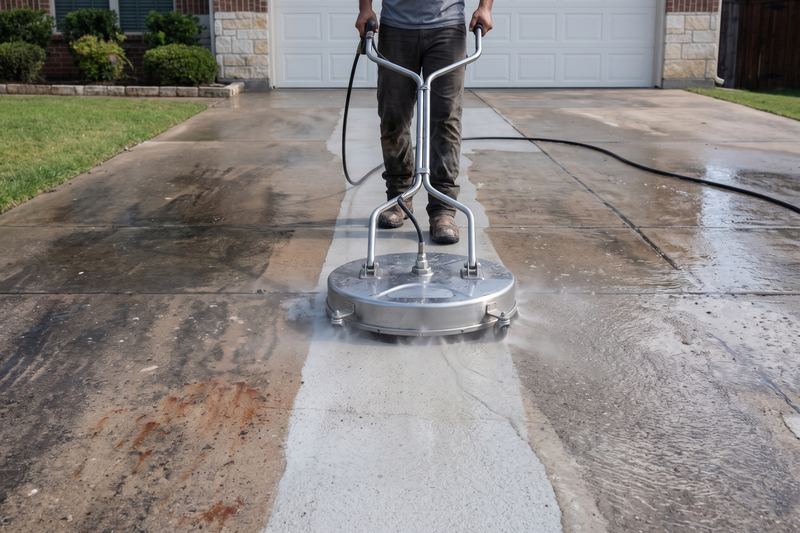
Ever seen a driveway with light and dark stripes after it was "pressure washed"? That's what happens when someone cleans a large flat area with a handheld wand. The distance between the nozzle and the concrete changes with every sweep, so some strips get blasted and others barely get touched. A turbo nozzle held too close can also etch the surface for good.
A surface cleaner fixes that. It's a round deck with spinning nozzles that sit at a fixed height above the concrete, so every square foot gets the same pressure. The result is an even, uniform finish. The wand only comes out for edges, steps and corners the surface cleaner can't reach.
How We Clean Driveways and Concrete
- Clear and protect. Cars are moved, outdoor outlets are covered and we check expansion joints and any loose pieces.
- Pre-treat. A cleaning solution goes on first to loosen mildew and organic stains so less pressure is needed.
- Surface clean. The rotary surface cleaner does the main areas in overlapping passes.
- Detail the edges. Steps, corners and the strip along the garage door are cleaned by hand.
- Post-treat. A light treatment kills any mildew left in the pores and helps the concrete stay clean longer.
- Rinse and inspect. Walls, garage doors and beds next to the concrete get rinsed, and we look it over with you.
Concrete Cleaning Across Keller, TX
Driveways are the most common request, but the same process works on almost any hard surface around the house:
- Front walks and side yard paths
- Back patios and covered porches
- Pool decks, including cool-deck coatings at lower pressure
- Pavers and flagstone
- Stamped and stained concrete, cleaned gently so the finish isn't damaged
- Curbs and the street apron at the end of the driveway
Planning to seal your concrete? It has to be completely clean and dry first, or the sealer locks the stains in. Cleaning a few days before sealing gives it time to dry out.
How Often to Clean Concrete in North Texas
Every one to two years keeps most driveways in Keller looking good. Shaded driveways and north-facing walks tend to need it yearly, while a sunny driveway with little tree cover can go longer.
Good times to book: spring, once the pollen is done; before you list your home; before a big party or the holidays; or when an HOA letter shows up about a stained driveway. Combining it with a house wash is the most cost-effective way to do it.
Get a Free Driveway Cleaning Quote
Tell us roughly how big the driveway is and what's staining it, and we'll reply with a price.
Driveway and Concrete Cleaning Questions
Will pressure washing remove oil stains?
It will lighten most of them. Fresh drips usually come out with a degreaser and hot water. Old stains that have soaked deep into the concrete often fade a lot but may leave a shadow.
Can you clean pavers?
Yes. Pavers get cleaned at lower pressure so the joint sand isn't blasted out, and the joints may need fresh polymeric sand afterward. We'll tell you before we start if that's likely.
Will it damage my concrete?
Not with a surface cleaner and the right pressure. Concrete that is already flaking or badly worn can lose a thin top layer, so we point out any weak spots before cleaning them.
How soon can I drive on it?
Right away, but it's best to wait until it's dry, usually an hour or two in warm weather, so tires don't track dirt back onto the clean surface.